

China has been hot on the heels of the USA in reclaiming the top spot in the Olympic medal tally since relinquishing it at the 2012 London Games. At Paris 2024, the two sporting giants finished with 40 gold medals apiece, with USA claiming the crown thanks to a higher silver count.
But in para sports, China holds an iron grip. The Asian powerhouse has topped the table at every Paralympic Games since Athens 2004. Even the USA’s track-and-field pedigree pales against China’s supremacy in para athletics.
That supremacy is now on display again. China enters the 12th World Para Athletics Championships in New Delhi as the favourite, having led the medal table in every edition but one since 2002. The exception came in Lyon in 2013, when it slumped to sixth, finishing 16 gold medals behind leader Russia.
What makes China virtually untouchable in para sports? The answer, say observers, is simple: government support.
The General Administration of Sport (GAS), the state agency overseeing sports policy, reports directly to the central government. Under its ambit fall the All-China Sports Federation, the Chinese Olympic Committee and the National Paralympic Committee of China. This centralised model allows sweeping State control and coordination.
The result has been heavy investment in infrastructure, including facilities tailored for para athletes. In 2007, a year before Beijing hosted the Summer Olympics and Paralympics, China opened the China Disability Sports Training Centre (CDSTC), the country’s first dedicated facility for athletes with disabilities. Located 17 kilometres northwest of Beijing’s airport, the sprawling 238,235-square-metre campus serves as a training and preparation hub for para athletes. While day-to-day training happens at multiple provincial centres, the CDSTC is promoted as the focal point before major events.
ALSO READ | Praveen Kumar: I’ve never thought of myself as ‘just’ a para athlete. I want to inspire everyone
“Olympic funding is an issue for most countries. Paralympic funding is almost an afterthought. Whereas for China, they think this is an area where they can dominate. The gap between Olympic and Paralympic funding in China is going to be much smaller than in other countries,” said Mark Dreyer, founder of China Sports Insider.
“Other countries would be really struggling for funding across the board in every sport, whether it’s a benefactor or self-funding. Whereas China is the State-backed model, which just gives them such an advantage,” he added.
That advantage is set to grow. With the government identifying sports as a key driver of economic growth in its 14th and 15th Five-Year Plans, State support for para sports will likely only deepen.
China’s medal strategy is another factor behind its dominance. Resources are funnelled toward disciplines with the highest probability of medals.
ALSO READ | Blade, wheels, and grit: How Indian para athletes are getting access to specialised equipment
“China has long identified sports where they think the competition is lowest and where there is the highest chance of winning one or perhaps more medals,” said Dreyer, author of Sporting Superpower: An Insider’s View on China’s Quest to Be the Best.
“Football, for example, is very competitive globally; there’s only one set of medals. From an Olympic perspective, it doesn’t make any sense to be pushing that when you can try and develop [for example] a rowing team and have many different chances of medals.”
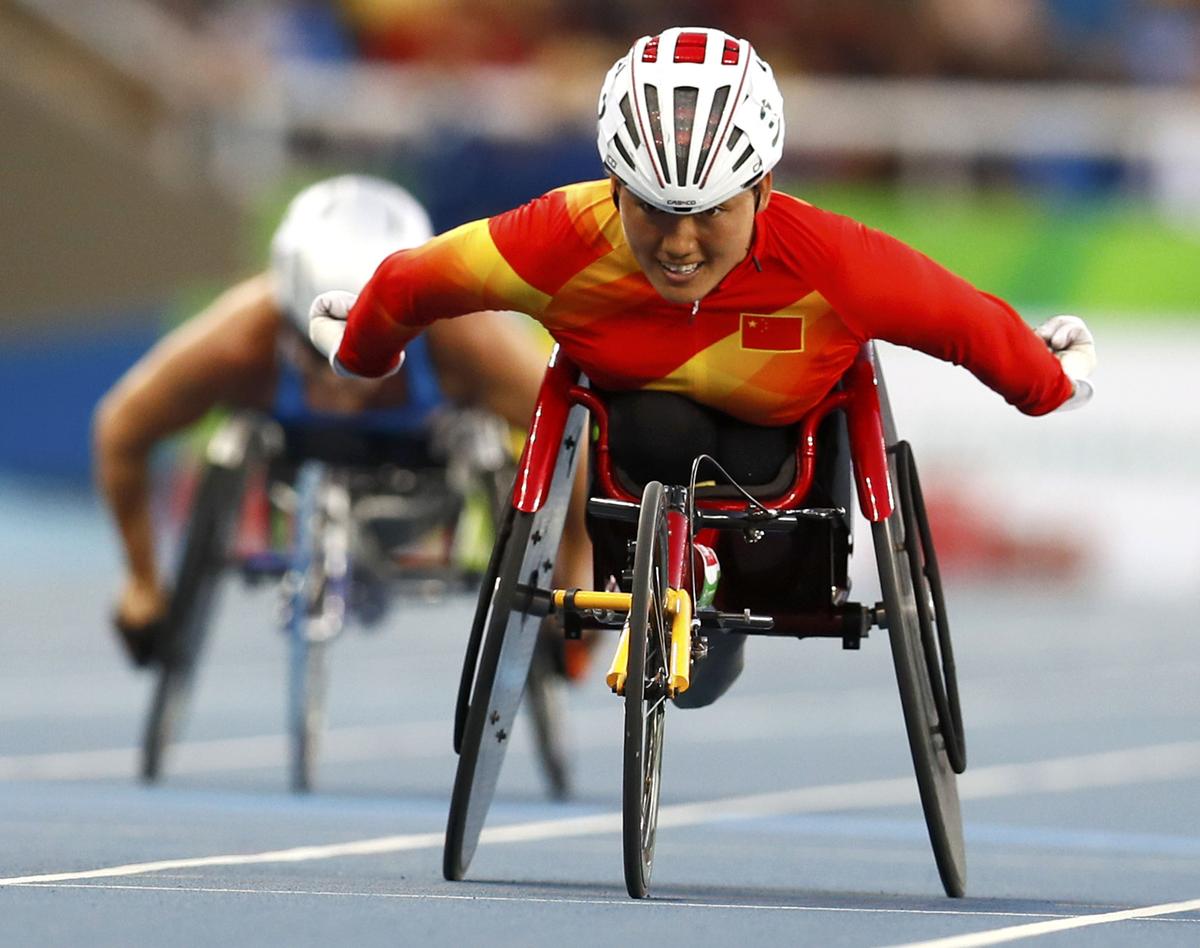
FILE PHOTO – Zhou Hongzhuan of China sets a new world record and wins the gold medal in the event.
| Photo Credit:
Reuters

FILE PHOTO – Zhou Hongzhuan of China sets a new world record and wins the gold medal in the event.
| Photo Credit:
Reuters
Multidisciplinary events such as the Paralympics and World Championships cap athlete quotas per country. While the rule applies to all nations, China’s massive talent pool and its single-minded focus on medals mean that only the crème de la crème qualify to compete.
This fierce competition for places pushes early talent identification and grooming. In many parts of the world, para athletes turn to sport only after sustaining an injury, leaving them a narrow window to prepare for elite competition. In China, athletes are often identified early and steered into State-run sports hostels, committing them to a lifelong path in sport.
Yet China’s glittering medal haul does not tell the whole story. The United Nations Committee on the Rights of Persons with Disabilities, in a 2022 review, flagged gaps in healthcare, violations against minority groups and restrictions on civil society. Until such structural issues are addressed, China’s para sport supremacy will continue to carry an asterisk.
Published on Sep 25, 2025

